Project Details
The Background
Challenge: The UX organization lacked standardized workflows, shared documentation, and operational governance. Teams relied on inconsistent processes, duplicated work, and disconnected tools, making it difficult to estimate work, align across teams, maintain visibility, and scale UX effectively.
Business Need: Product and UX needed repeatable systems that improved collaboration, increased delivery predictability, reduced operational waste, and supported enterprise-scale product development.
User Need: Designers, researchers, content strategists, and product partners needed clearer expectations, reusable resources, and transparent workflows that allowed them to spend less time navigating process and more time solving customer problems.
My Role
I identified operational gaps through research, stakeholder interviews, and observation, then led the strategy, design, implementation, and adoption of a comprehensive DesignOps framework. I partnered with designers, managers, directors, and cross-functional partners to introduce scalable workflows, enterprise tooling, and team standards while training teams on their adoption.
My Hypothesis
I believed improving the way teams worked would improve the quality of the products they built. By reducing ambiguity, standardizing workflows, and giving teams better operational tools, we could increase consistency, accelerate delivery, and create a calmer, more collaborative design culture.
How It Came to Life
Rather than assuming where operational challenges existed, I conducted research across individual contributors, managers, and senior leaders to understand recurring pain points. Also, using AI, I synthesized and studied information from retrospective data, qualitative feedback, past explorations, documented workflow bottlenecks to identify opportunities to improve visibility, communication, planning, estimation, and delivery.
One outcome of this work was identifying operational inefficiencies estimated to represent more than $1.5 million in annual savings opportunities through improved processes and reduced waste.

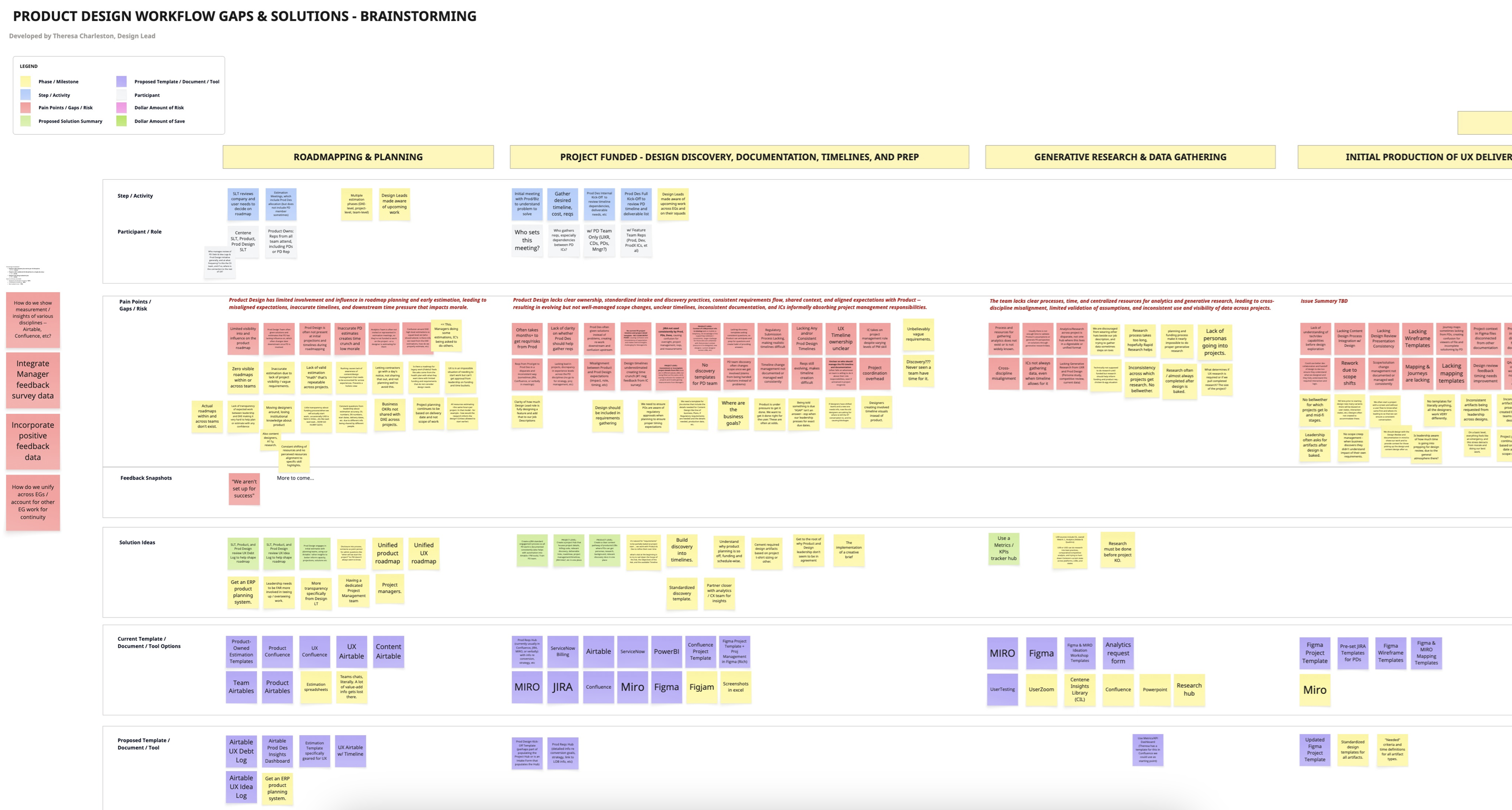
Using findings from research, I created end-to-end workflow maps that visualized existing pain points alongside proposed solutions. These maps became alignment tools that helped leadership prioritize operational improvements and provided teams with a shared understanding of how work should flow across Design, Product, and Engineering.
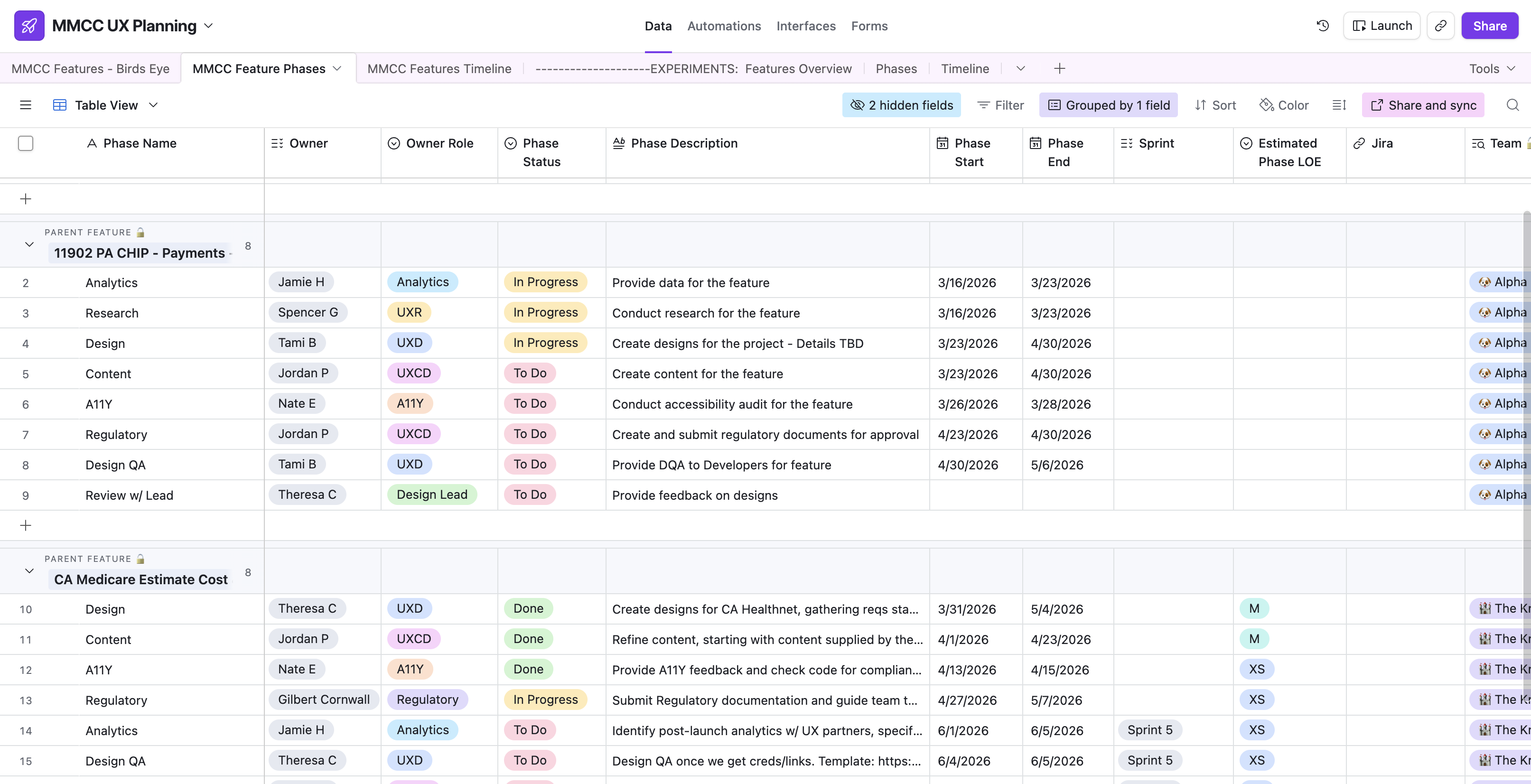
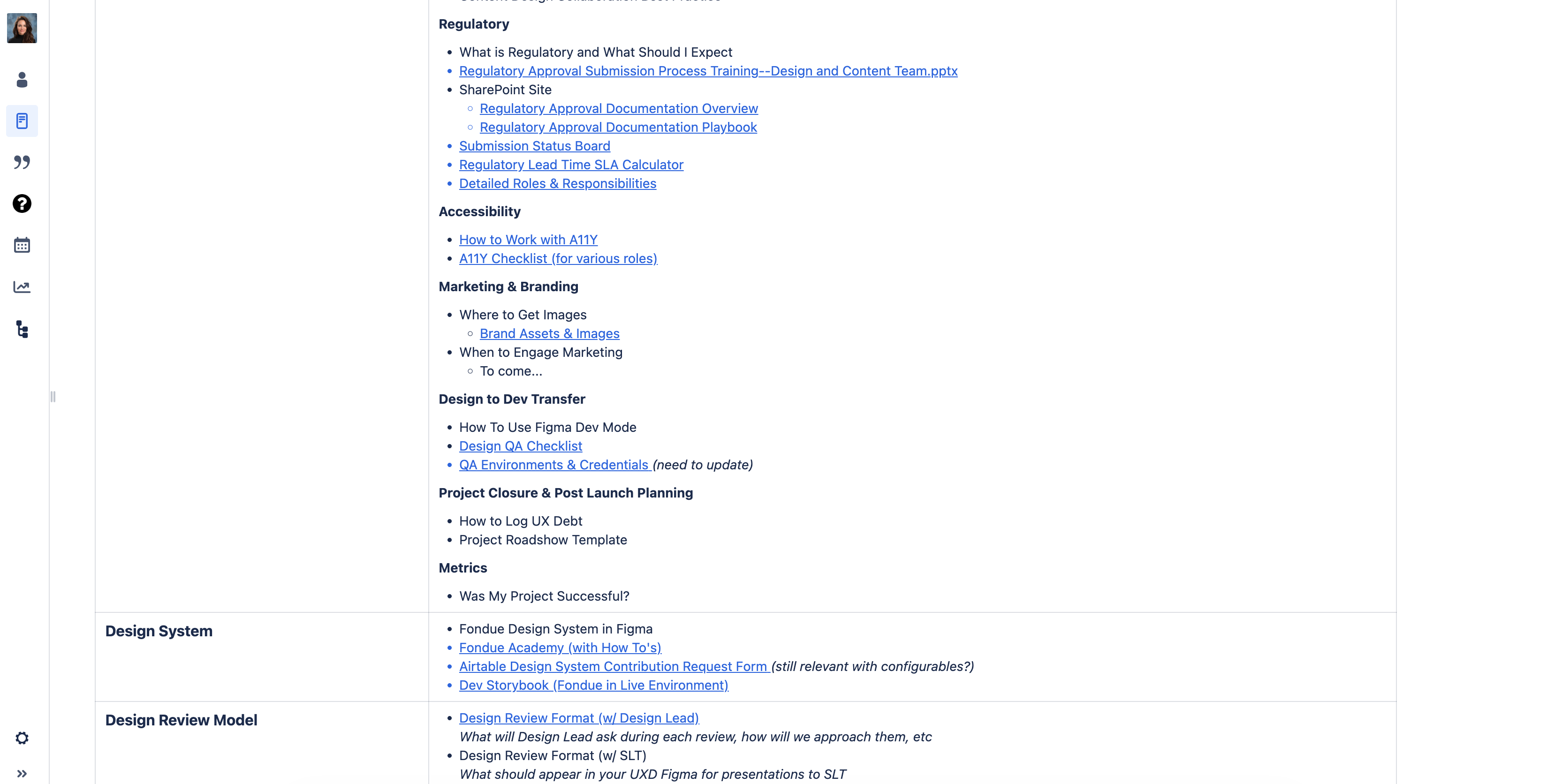
I designed and implemented reusable frameworks across the UX organization, including: UX Charter, UX Requirements, UXQA, Timeline Roadmap Planning, Deliverable Tracking, Team Alignment Documentation, Project Checklists and Tracking, Individual and Team Goal Tracking, AI Workflow Integration, and Reusable Templates and Documentation. These systems created greater consistency while reducing the effort required to start, manage, and deliver complex initiatives.

The Solution
Successful DesignOps depends on adoption—not documentation. I introduced the new workflows through collaborative training sessions, guidance materials, and ongoing coaching to help teams integrate the new systems into their daily work.
The initiative transformed UX operations from disconnected, manual processes into a scalable system that supported planning, communication, governance, and execution. Teams gained reusable resources, greater visibility into work, and more consistent ways of collaborating across disciplines, allowing designers to spend more time solving customer problems and less time navigating operational complexity.
Accomplishments & Results
Established the organization's first scalable DesignOps framework.Standardized UX workflows across multiple enterprise product teams.Created reusable templates and governance supporting planning, delivery, and quality.Improved visibility, collaboration, and cross-functional alignment.Helped identify workflow improvements representing $1.5M+ in potential operational savings.Increased consistency, reduced operational friction, and created a calmer, more efficient team environment through standardized processes and training.
.png)


