Project Details
The Background
Challenge: Centene's web products often struggled to reflect the company's genuinely caring and human spirit, lacked guidance so users could seamlessly travel through their journey from the public site through membership, and was forced users to do all the work of hunting, pecking, and knowing what to ask.
Business Need: Explore ideas that could be implemented within two years to help make our web products frictionless and indispensable, and to increase engagement, retention, task success, and satisfaction.
User Need: Users struggled to find content in both the public site and member portal, experienced cognitive overload and task success issues, and they often felt "abandoned" after becoming a member. The traditional model also made them have to seek out answers in an already-complex environment, which led to low retention and engagement. I focused my sights on finding a way to proactively guide visitors through their health insurance journey in a personalized and intuitive way that brought the answers to them before they had to ask.
My Role
The Centene Innovations team was comprised of Design Leads, so my primary role was to design future-thinking concepts for the Executive Design Leadership team. I and my fellow Leads each worked on our own innovation concept that we'd identified had potential based on our research and experience across products. I created UX deliverables for what I called the guidance model, such as ideation sessions, competitor evaluation, user flow maps, wireframes, hifi visual designs, etc. I also created strategy and project management assets to align teammates towards one goal, and led unification sessions to assimilate our various ideas into a consolidated and strengthened product narrative.
My Hypothesis
Based on my research, I observed that healthcare insurance members, particularly recipients of Medicaid, Medicare, and Marketplace, don't always feel truly cared for when using the platforms available to them. I hypothesized that if we infused our caring spirit and offer proactive, receptive, anticipatory guidance through tasks and navigation in a way that felt personal, genuine, and receptive, we could become an indispensable assistant in our visitors’ lives and could even help save lives.
What became clear to me was that we had the opportunity to create something that had the potential to differentiate our products and help users in a transformational way: a generative AI-powered, intuitive, personalized assistant that elevated the user's interaction model.
How It Came to Life
The seed of this guidance model was planted in my mind during somewhat unrelated ideation sessions which initially had a wide range of business requirements and user jobs to be done. The task at that time was to explore anything that could make our products frictionless and indispensible.
From those broad explorations and research findings I observed from other projects, I noticed a repeating theme—our visitors didn't always know what to ask, they needed more guidance and support, and we needed to integrate more AI-powered tech. I began gearing my ideation sessions towards this concept.
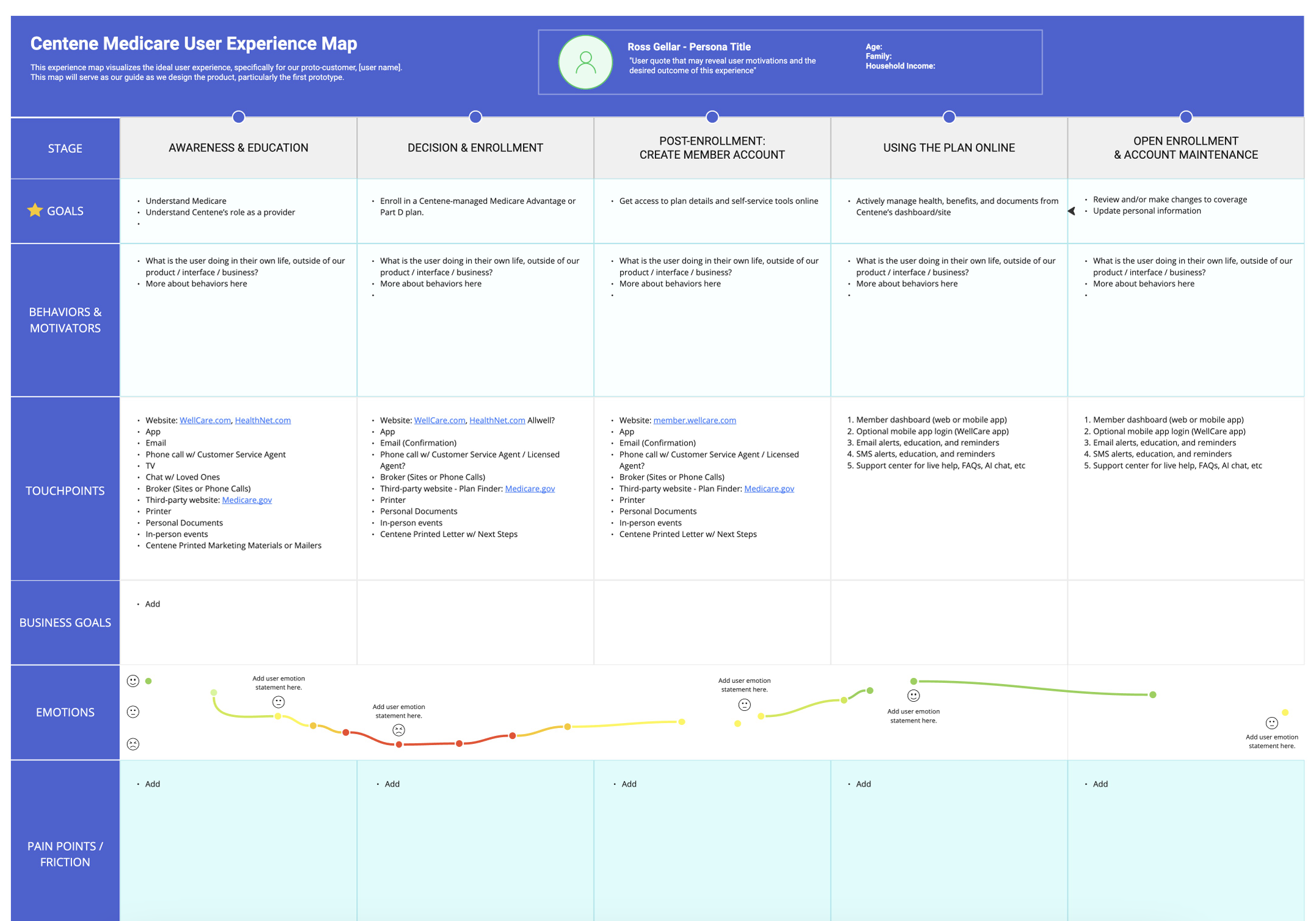
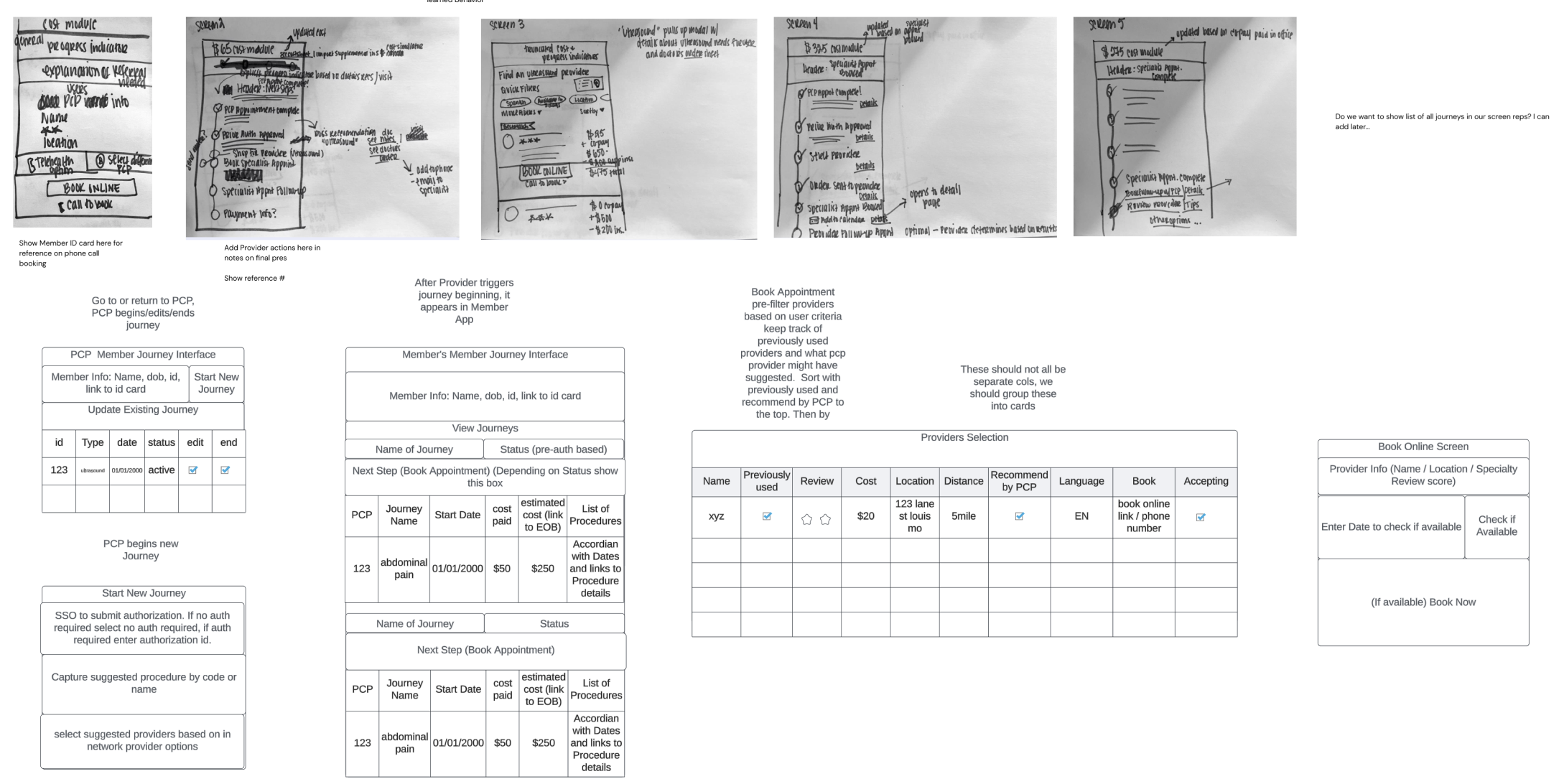
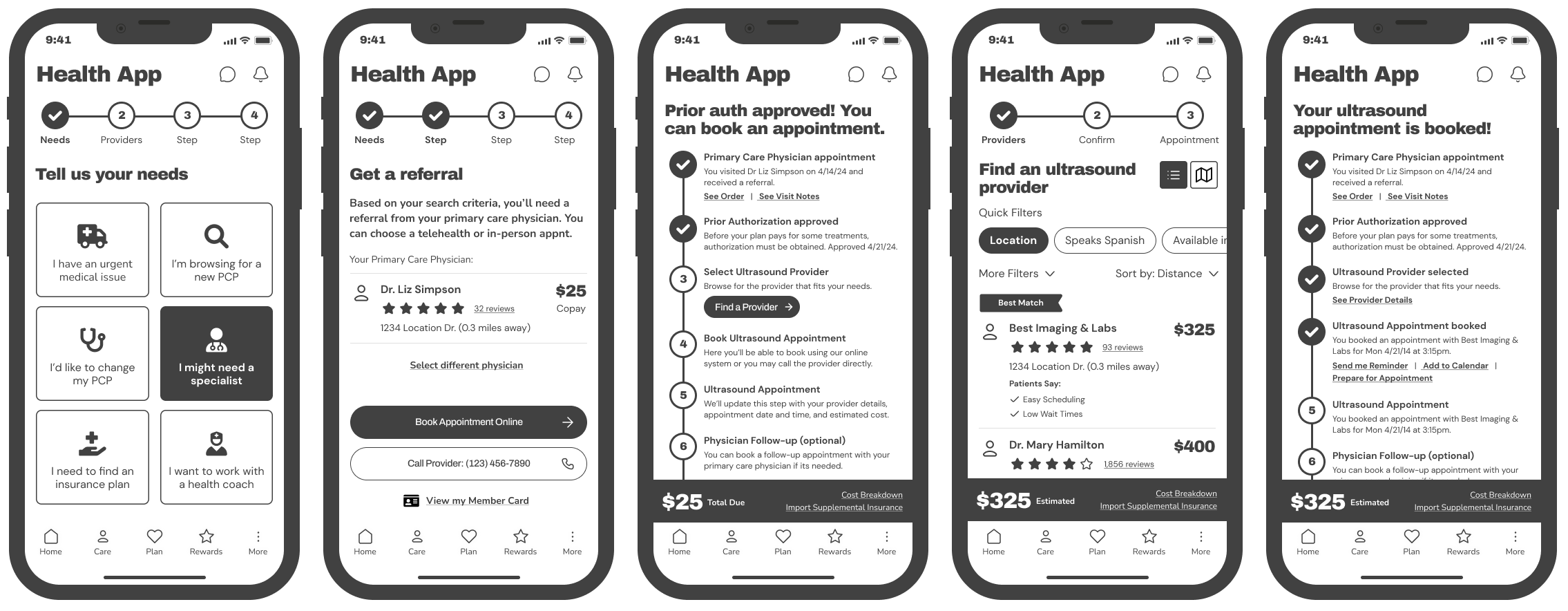
Amongst other deliverables, I created personas, idea sessions, journey maps, sketches, and wireframes.


The Solution
One highlight of my model was that personalized guidance could be embedded anywhere along the visitor journey—from public site to Member portal and all touchpoints in between—and could be line-of-business agnostic, through both a chat assistant available at all times plus incorporation into the page content itself.
The model was designed to offer both proactive and receptive support, meaning guidance would be anticipatory and available before the user had to ask, as well as on-demand. The visitor's journey surfaced custom information based on most useful content for them, and the system learned what to show and when.
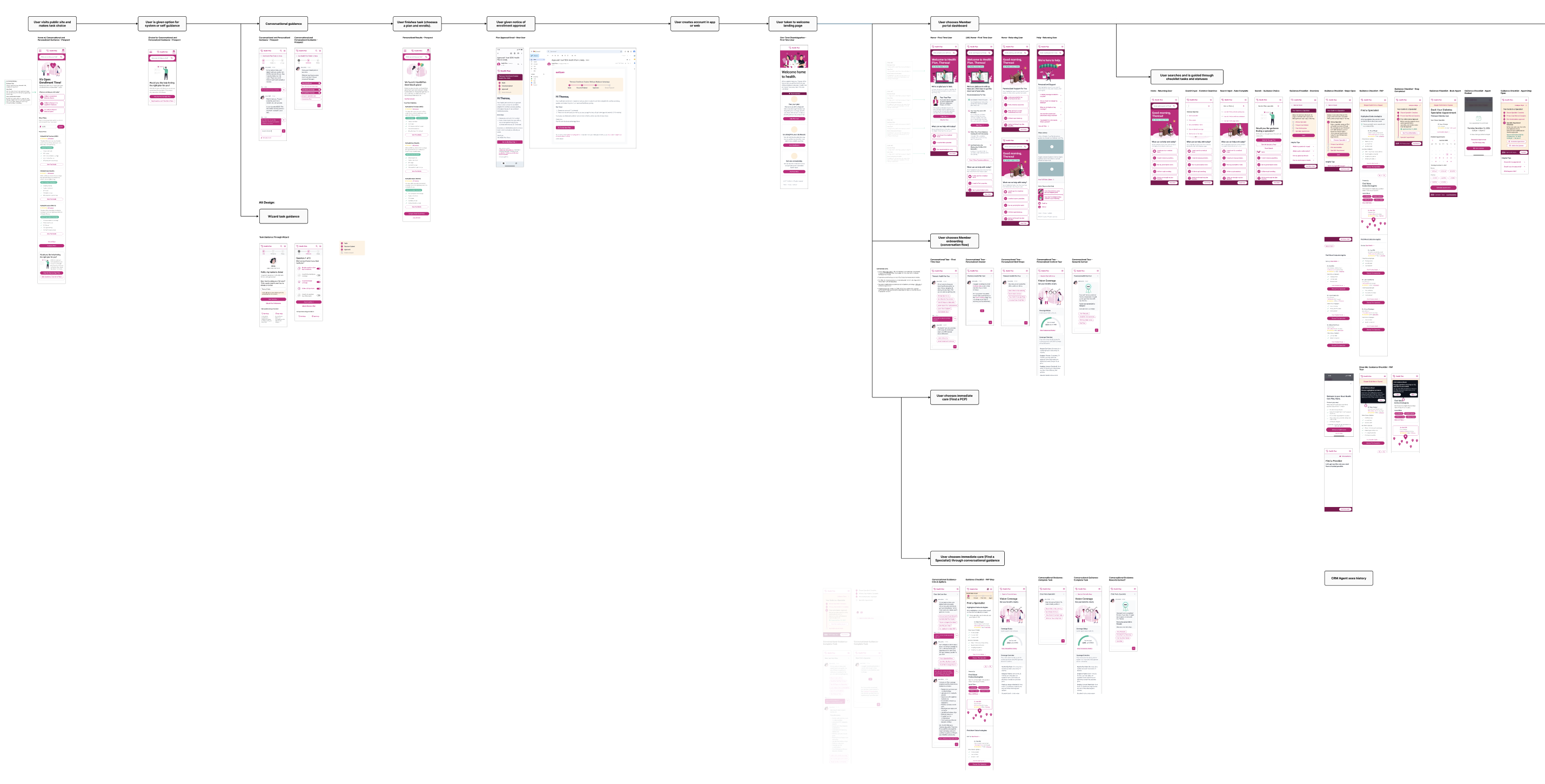


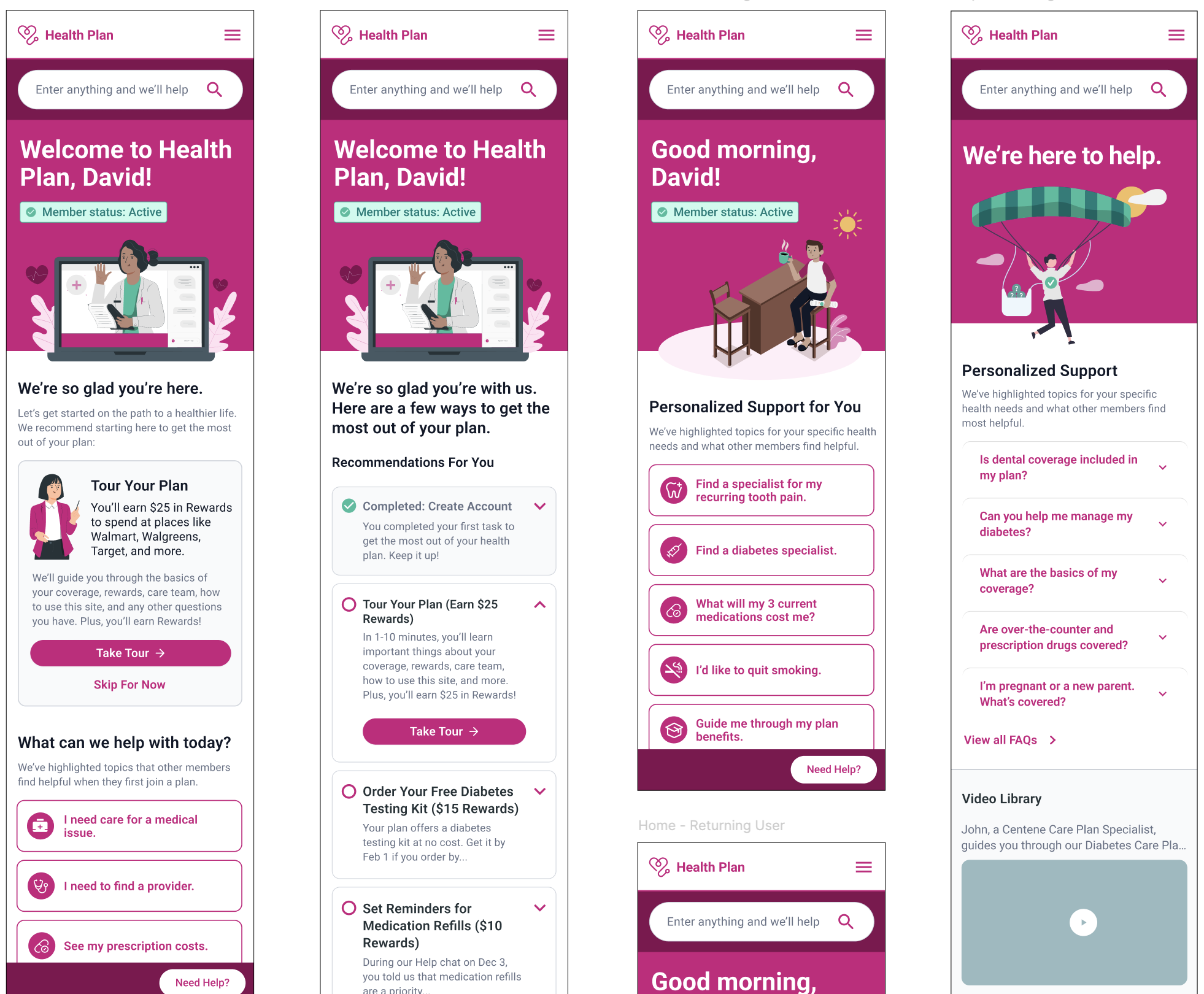

Throughout their journey, whether new or returning, visitors could also 'choose their path' based on actions we found to be most fruitful, session awareness, their specific needs, and depending on how much active guidance they wanted.
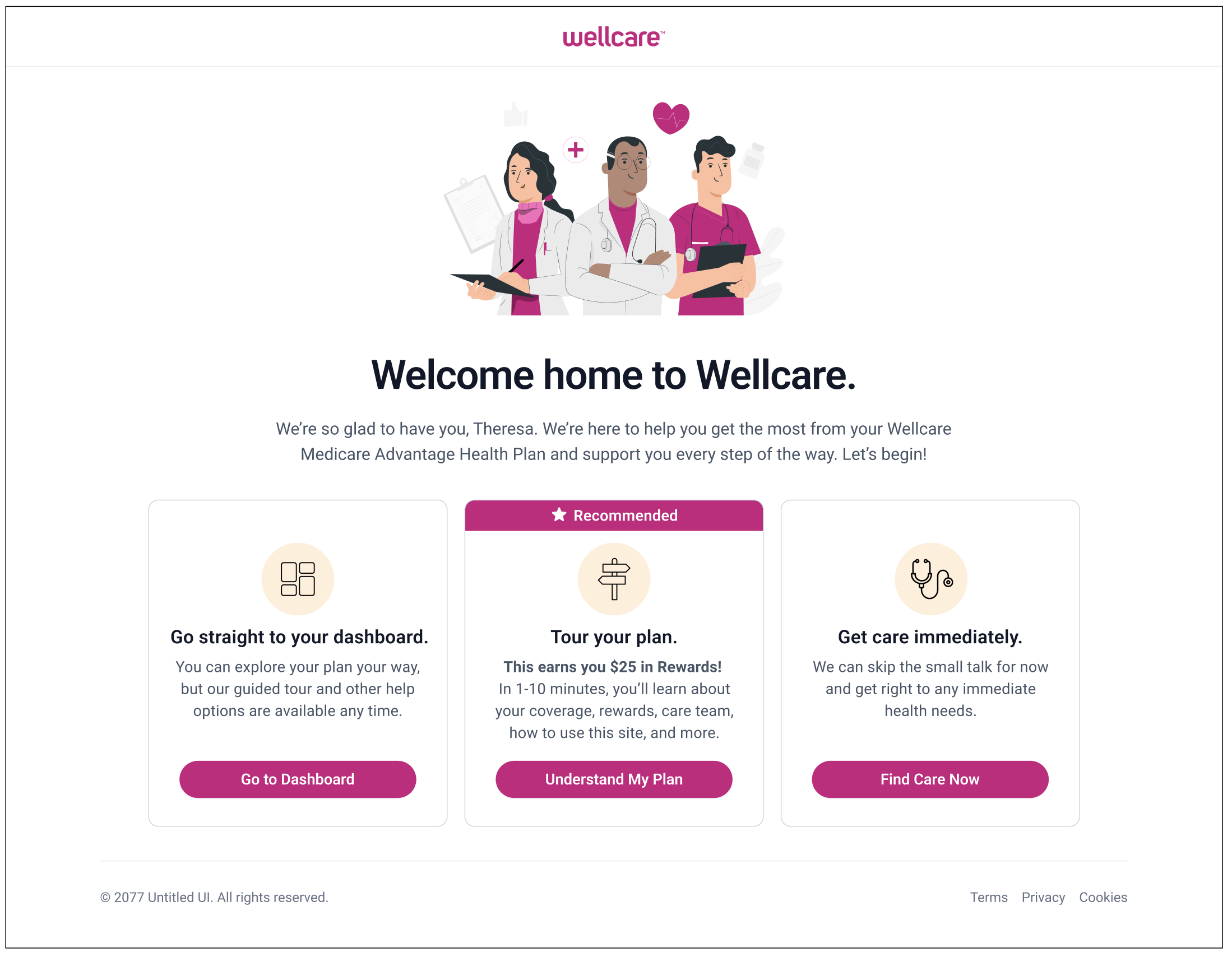
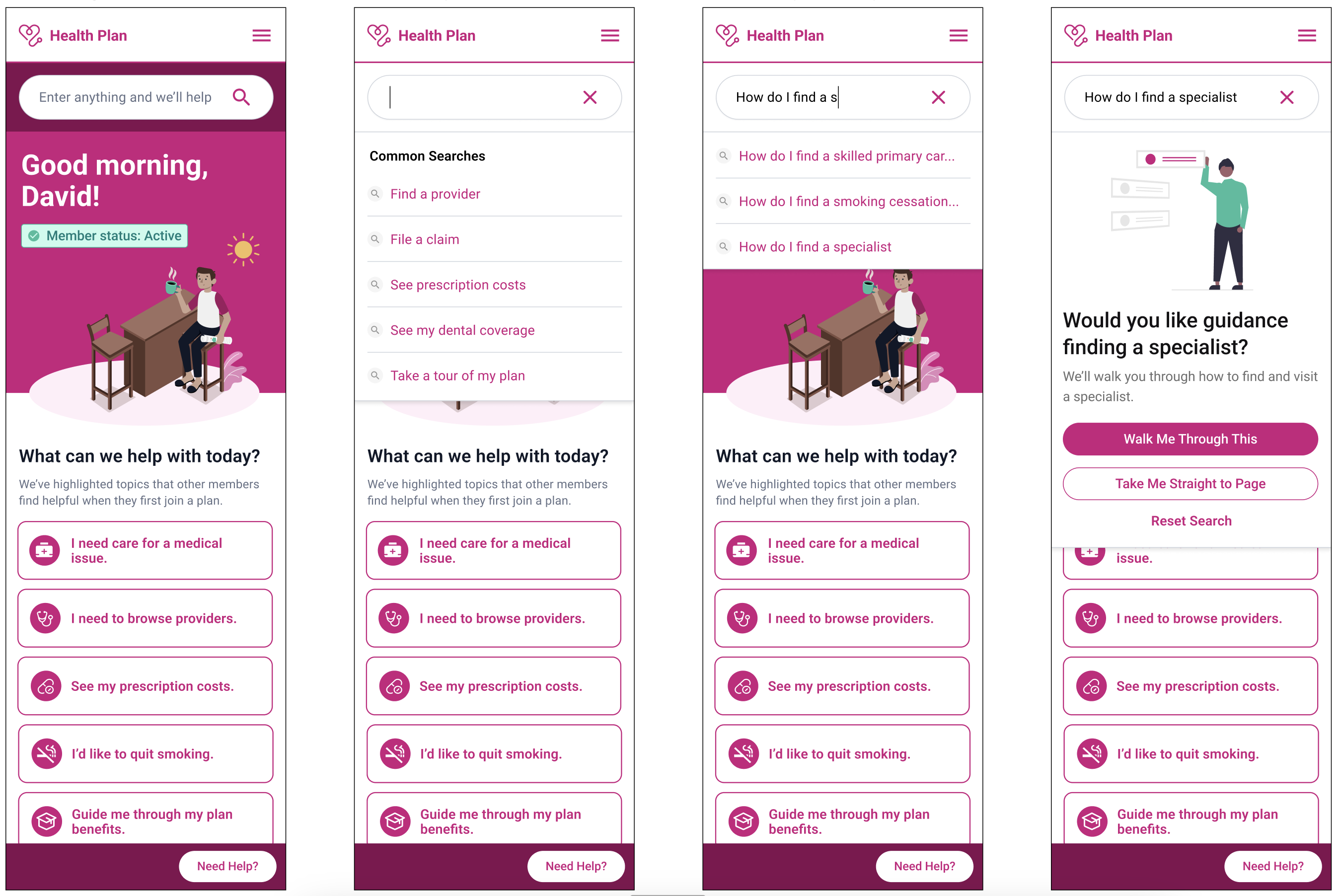

I conducted studies around color, font, and image preferences for our specific age groups and I designed brand alternatives to meet our users needs and differentiate us in the market—with brighter colors, friendly custom illustrations and larger font.


My earlier explorations included experimenting with entirely new UI, wherein I created style tiles based on UI that better appealed to users.


Lines of business had the option to use the embedded chat assistant or a pre-determined user flow (if their AI techology wouldn't allow generative data).
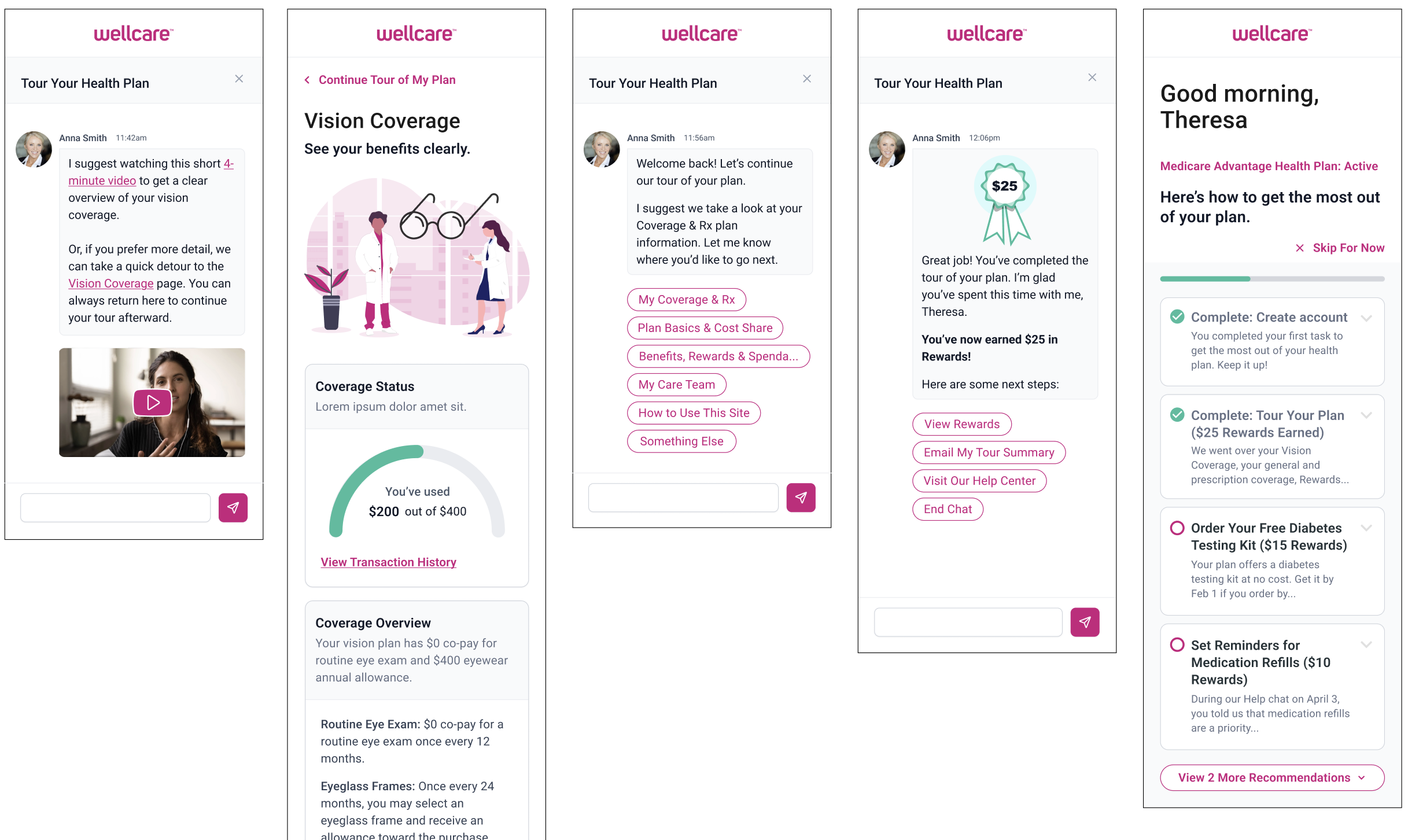

I then led unification sessions for our team of Design Leads, in prep for presentation to Executive Design Leadership. My goal in these sessions was to consolidate overlapping ideas from various contributors into one product narrative and to identify frequent/repeated themes in our ideas.

Accomplishments & Results
Executive Design Leadership were thrilled with the guidance model proposal. However, due to company restructuring, the project was put on hold and awaits further testing, funding, and development.
Since that time, one of the company's primary competitors developed an AI-powered guidance model of their own, which has seen significant and measurable business and user success—including winning several prestigious national enterprise AI and customer experience awards. My hope is that Centene will eventually develop the guidance model concept as well.
.png)


